step 01 / read the basics
General Information
contents / jump to a section
Everything you should know before installing.
Hardware Requirements
Windows 7
- A 1 GHz processor or faster 32-bit (x86) or 64-bit (x64) processor.
- 1 GB of RAM (32-bit) or 2 GB RAM (64-bit)
- 16 GB available hard disk space (32-bit) or 20 GB (64-bit)
- DirectX 9 graphics device with WDDM 1.0 or higher driver
Windows 8.1
- A 1 GHz processor or faster 32-bit (x86) or 64-bit (x64) processor.
- 1 GB of RAM (32-bit) or 2 GB RAM (64-bit)
- 16 GB available hard disk space (32-bit) or 20 GB (64-bit)
- DirectX 9 graphics device with WDDM 1.0 or higher driver
Windows 10
- A 1 GHz processor or faster 32-bit (x86) or 64-bit (x64) processor.
- 1 GB of RAM (32-bit) or 2 GB RAM (64-bit)
- 16 GB available hard disk space (32-bit) or 20 GB (64-bit)
- DirectX 9 graphics device with WDDM 1.0 or higher driver
Where can I find information about Windows and my computer hardware?
To see this information on all versions of Windows you have to: open Start, then Control Panel and System. You will see the “basic information about your computer” screen.
Hint:
- If you can’t find the Control Panel on the list, use the search bar or Cortana.
- If you can’t find the System icon in Control Panel, change the view to Small or Large Icons, or click System and Security and then System.
You can also refer to this article: Check Computer Specifications
How do I look for drivers?
We always recommend downloading at least your network card drivers since they might be missing after the installation or upgrade. The best thing to do is to download all of your computer’s drivers so you can easily replace them after installation or upgrade.
If you have a laptop, looking for drivers will be as easy as opening your browser and searching your computer model number with the added word “drivers”. The first two results will probably be your computer manufacturer’s website support page for your particular laptop model, where you can find the proper drivers for your laptop.
How do I find my laptop's model number?
1. There should be a sticker on your laptop with manufacturer and model number information (probably on the bottom of your laptop).
2. You can run the DirectX Diagnostic Tool in your Windows and find your exact model number in there. In order to do that, open your Start menu, type “dxdiag” in the search box and hit Enter. Or go to the Start menu, click “Run…” and type “dxdiag” there. (Here is an example of the dxdiag window on a Dell computer.)
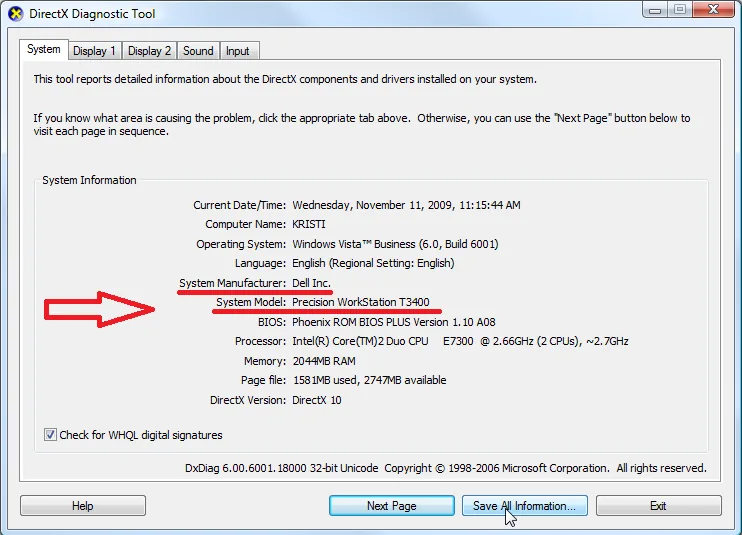
As you can see, under “System Manufacturer” and “System Model” there is the information that you need. If you have a desktop it may show its model, but if it was assembled rather than manufactured you will only see your motherboard manufacturer and model number.
Upgrade to Windows 7
Can I upgrade from Windows XP?
If your computer meets the required specifications you will be able to install Windows 7, however it will not be a direct upgrade: it will require a custom installation which will delete your existing programs and may remove all of your files (if you choose to install on an existing partition, all of your files will be moved to the windows.old folder). In this case, we recommend a clean installation which will wipe everything from the hard drive.
You will need to back up all of your valuable data before attempting installation. Make sure that your computer has a DVD drive or can boot from USB; if it doesn’t, you won’t be able to perform this installation.
Can I upgrade from Windows Vista?
Yes, you can. However, if you want to perform a direct upgrade which will keep your files and programs intact, you can only do so through specific upgrade paths. Please refer to the table below:
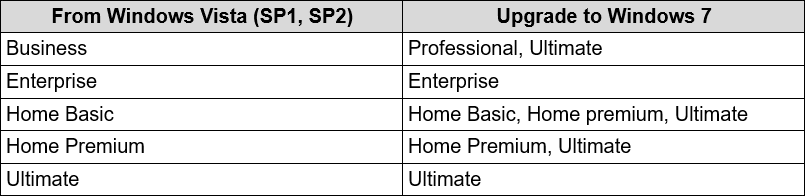
If you would like to switch editions, you will need to perform a clean installation which will wipe everything from the computer.
Upgrade to Windows 8.1
Can I upgrade from Windows XP, Windows Vista or Windows 7?
If your computer meets the required specifications you will be able to install Windows 8.1, however it will not be a direct upgrade: it will require a custom installation which will delete your existing programs and all of your files. In this case, you can only perform a clean installation which will wipe everything from the hard drive.
You will need to back up all of your valuable data before attempting installation. Make sure that your computer has a DVD drive or can boot from USB; if it doesn’t, you won’t be able to perform this installation.
Upgrade to Windows 10
Can I upgrade from Windows XP/Vista?
If your computer meets the required specifications you will be able to install Windows 8.1 or 10, however it will not be a direct upgrade: it will require a custom installation which will delete your existing programs and all of your files. In this case, you can only perform a clean installation which will wipe everything from the hard drive.
You will need to back up all of your valuable data before attempting installation. Make sure that your computer has a DVD drive or can boot from USB; if it doesn’t, you won’t be able to perform this installation.
Can I upgrade from Windows 7?
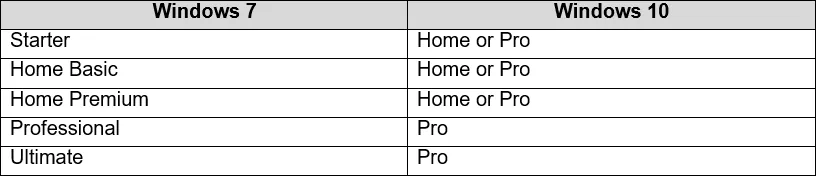
Yes, you can. However, if you want to perform a direct upgrade which will keep your files and programs intact, you can only do so through specific upgrade paths. Please refer to the table below: